Broken garage door springs and cables cause different symptoms: a snapped spring makes the door feel heavy, refuse to open, or slam shut. A broken cable makes the door hang crooked, lift unevenly, or dangle loosely on one side. Torsion springs wind cable drums; a failure in either component halts safe operation and requires professional diagnosis.
Key Takeaways
- Broken garage door cables can cause uneven lifting, angled hanging, or immediate door failure.
- Worn springs rank as the most common cause of garage door malfunctions and safety hazards.
- Proper cable replacement requires identifying issues, safely removing damaged cables, and adjusting spring tension correctly.
- Regular maintenance and recognizing early warning signs prevent costly repairs and potential accidents for homeowners.
What Should You Check Before Diagnosing the Issue?
Three quick observations separate a spring problem from a cable problem before you pull out any tools: the door's balance, the position of the cables at the bottom bracket, and the sound the door makes during operation. A garage door in trouble signals more than mere annoyance. It represents a genuine safety hazard, since garage doors rely on springs and cables to manage that weight safely. Skipping this initial check risks a misdiagnosis that wastes time or, worse, puts someone in the path of a door under tension.
Homeowners should look at how the door sits when it's partway open. A door that hangs crooked, with one side lower than the other, often points to a cable issue rather than a spring problem. A door that feels unusually heavy or won't budge at all more often signals spring failure. The springs bear the brunt of counterbalancing the door's weight.
What Does a Frayed or Snapped Cable Look Like?
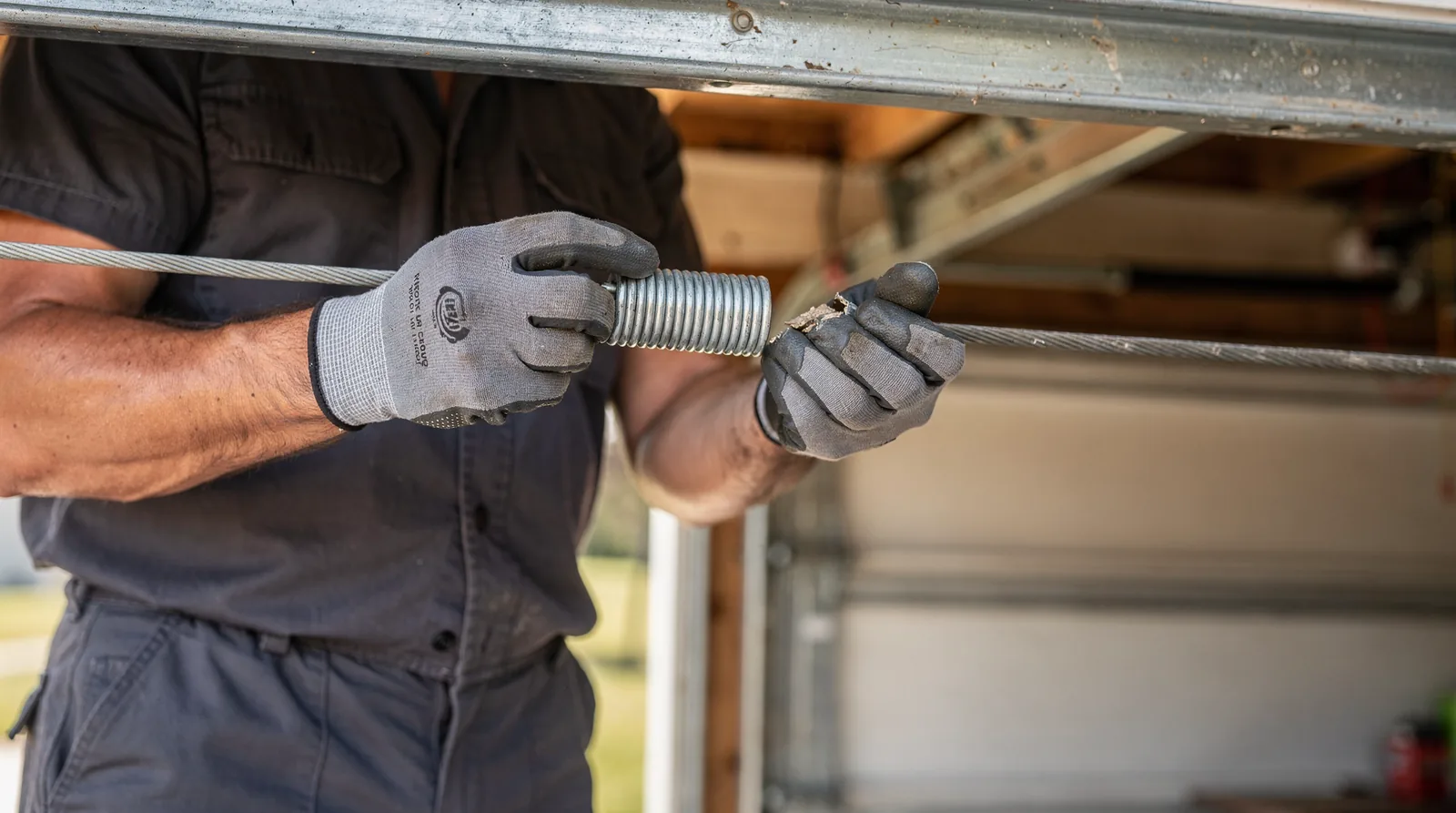
Frayed cables show visible strands separating near the bottom bracket or drum, sometimes with rust or kinking along the length. A fully snapped cable usually leaves the door tilted, stuck, or hanging loosely on one side.
Is It Safe to Inspect the Garage Door Myself?
Visual inspection from a safe distance is fine, but touching springs or cables under tension is not. Precision Garage Door of Bakersfield is located in Bakersfield, CA, US.
Before calling for help, homeowners can note:
- Whether the door is crooked or level when stopped mid-cycle
- Any visible fraying, rust, or slack in the cables near the drums
- Grinding, popping, or snapping sounds during operation
- Whether the door feels heavier than usual when lifted manually
Precision Garage Door Service of Bakersfield's around-the-clock availability means answers arrive any time a spring or cable fails, day or night.
How Can You Tell a Spring From a Cable Break?
Door position offers the clearest clue. A snapped cable typically leaves the door hanging at a noticeable angle. It stops the door from moving at all. One side loses its lifting connection while the other stays attached. A broken garage door spring vs. cable failure shows up differently: a spring failure often produces a loud bang when it snaps, followed by a door that feels unusually heavy or refuses to budge evenly on both sides.
Understanding how these two parts work together explains why their failures look so distinct. Cables wind around drums mounted at each end of the spring shaft. This connection allows the lifting force to reach both sides of the door at once. Springs do the heavy lifting behind the scenes, storing tension while the door sits closed and releasing it through the cables as the door opens. When a spring fails, the tension disappears entirely, leaving the door's full weight on the opener or on anyone trying to lift it by hand. When a cable fails, the spring may still have tension. It can no longer transfer evenly to the door.
What does a crooked garage door usually mean?
A door hanging unevenly, or noticeably tilted to one side, usually points to a cable problem rather than a spring issue. Because cables connect directly to the door's bottom corners, a frayed or snapped cable removes support from one side.
Is a loud bang always a spring breaking?
A sudden, sharp bang is a classic sign of spring failure, since the metal releases stored tension all at once. Homeowners should treat any loud noise from the garage as a signal to stop using the door immediately.
Bakersfield homeowners facing any of these symptoms benefit from having a local, certified technician inspect the torsion shaft, drums, and spring assembly together. Accurate diagnosis prevents further damage to the door system.
What Warning Signs Point to a Failing Spring?
A failing spring announces itself through sound, movement, and visible wear long before it snaps completely. Worn-out or broken springs rank among the most common causes of garage door trouble homeowners encounter. Catching these warning signs early spares a household from unexpected accidents. Prevents a manageable repair from turning into an emergency.
What Does a Bad Garage Door Spring Sound and Look Like?
A loud bang from the garage often signals a spring has already broken under tension. Before that final snap, homeowners may notice a stretched or sagging spring coil above the door track. The door itself may open unevenly, jerk partway through its cycle, or feel unusually heavy when lifted by hand.
Distinguishing a broken garage door spring vs cable matters because the fix and the danger level differ. A spring issue typically shows up as a visible gap in the coil or a door that will not stay open. A cable problem usually causes one side of the door to hang lower than the other. The cable no longer holds tension evenly.
Homeowners can watch for these indicators:
- A visible gap or separation in the torsion spring above the door
- A door that slams shut or drops suddenly instead of closing smoothly
- Excessive vibration or rattling noise during operation
- A door that feels significantly heavier than usual when opened manually
- Cables that appear frayed, loose, or slipped off their drums
Licensed technicians provide an upfront written estimate before any repair begins, giving homeowners clarity on what the job involves. Spring replacement work also comes backed by an industry-leading warranty, adding a layer of protection once the repair is complete.
What Should You Do After a Cable Breaks?
Immediate action prevents further damage: homeowners should stop using the garage door and call a licensed professional. A snapped or frayed cable turns the door into a safety hazard that can injure someone or damage property, so trying to force the door open manually only increases that risk.
Is it safe to open the garage door with a broken cable?
No — a door with a broken cable hangs unevenly and can fall without warning. The difference between a broken garage door spring and a broken cable matters here. A snapped spring and a snapped cable both cause the door to bind or drop, but either failure makes manual operation unsafe. Leaving the door alone until a technician arrives protects both people and property.
Once the door is confirmed unsafe to operate, homeowners can take these steps:
- Unplug or disengage the garage door opener so no one accidentally triggers it.
- Keep vehicles and household members clear of the door path.
- Photograph the cable and drum area for the technician's reference, without touching the springs.
- Schedule a professional repair appointment right away.
How fast can a broken cable get fixed?
Same-day service gets a broken cable repaired quickly in most cases, so the door doesn't sit unusable for days. Emergency after-hours calls come without added overtime charges, which matters for households needing evening or weekend repair.
Precision Garage Door of Bakersfield is the trusted name homeowners can rely on for urgent repairs like this. Backed by trust from over 1,688 happy customers. With a 4.8-star rating, the company brings dependable, professional cable repair to homeowners facing a broken or slipped cable.
What Mistakes Should You Avoid When Diagnosing?
Homeowners most often mix up a broken garage door spring vs cable failure by judging the problem from a single symptom, like a door that won't budge. Misreading the cause leads to wasted repair attempts and, in worse cases, injury from mishandled spring tension. Skipping a full inspection is the costliest mistake of all.
Before touching any part of the system, homeowners should note two facts. Cables typically last 5 to 10 years and come in torsion and extension styles. A door's age often points toward which part failed first. A door lasting a decade with no cable service is a strong candidate for wear-related failure rather than sudden damage.
How can homeowners avoid making the wrong call?
Certain habits turn a simple inspection into a costly error. Avoid these common missteps:
- Do not assume a loud bang always means a spring snapped; a frayed cable slipping off its drum makes a similar noise.
- Do not attempt spring or cable repair without training, since releasing tension can cause serious injury.
- Do not leave a hazardous, crooked door unaddressed overnight; hazards like this rarely improve on their own.
- Do not ignore a local resource when uncertainty remains.
Is it ever safe to test a garage door with a suspected spring or cable failure?
Testing a door manually under these conditions risks sudden drops or snapped cables that could strike bystanders. Certified technicians have the training to safely isolate the failed part. Homeowners in Bakersfield, CA benefit from reaching a local, trained team rather than guessing through DIY diagnosis, especially when 24/7 emergency support remains available for urgent situations.
FAQ
How does a broken spring make the door feel?
A door with a broken spring feels heavy, refuses to open, or slams shut. A loud bang often occurs when the spring snaps, followed by uneven lifting on both sides.
How does a broken cable make the door look?
A broken cable makes the door hang crooked, the elevator move unevenly, or the door dangle loosely on one side. The door tilts at a noticeable angle since one side loses its lifting connection.
Should homeowners touch the springs or cables themselves?
Visual inspection from a safe distance is fine, but touching springs or cables under tension is not safe. Precision Garage Door of Bakersfield offers around-the-clock availability for professional diagnosis.
Conclusion
In closing, whether you're dealing with a broken spring or a snapped cable, the key takeaway is this: don't wait and don't try to fix it yourself. Both issues affect how your garage door operates and pose real safety risks to you and your family. A professional inspection helps you understand exactly what's wrong and what to do next. When you're ready to tackle the problem, you'll know you've made the right call by choosing someone who knows garage doors inside and out.