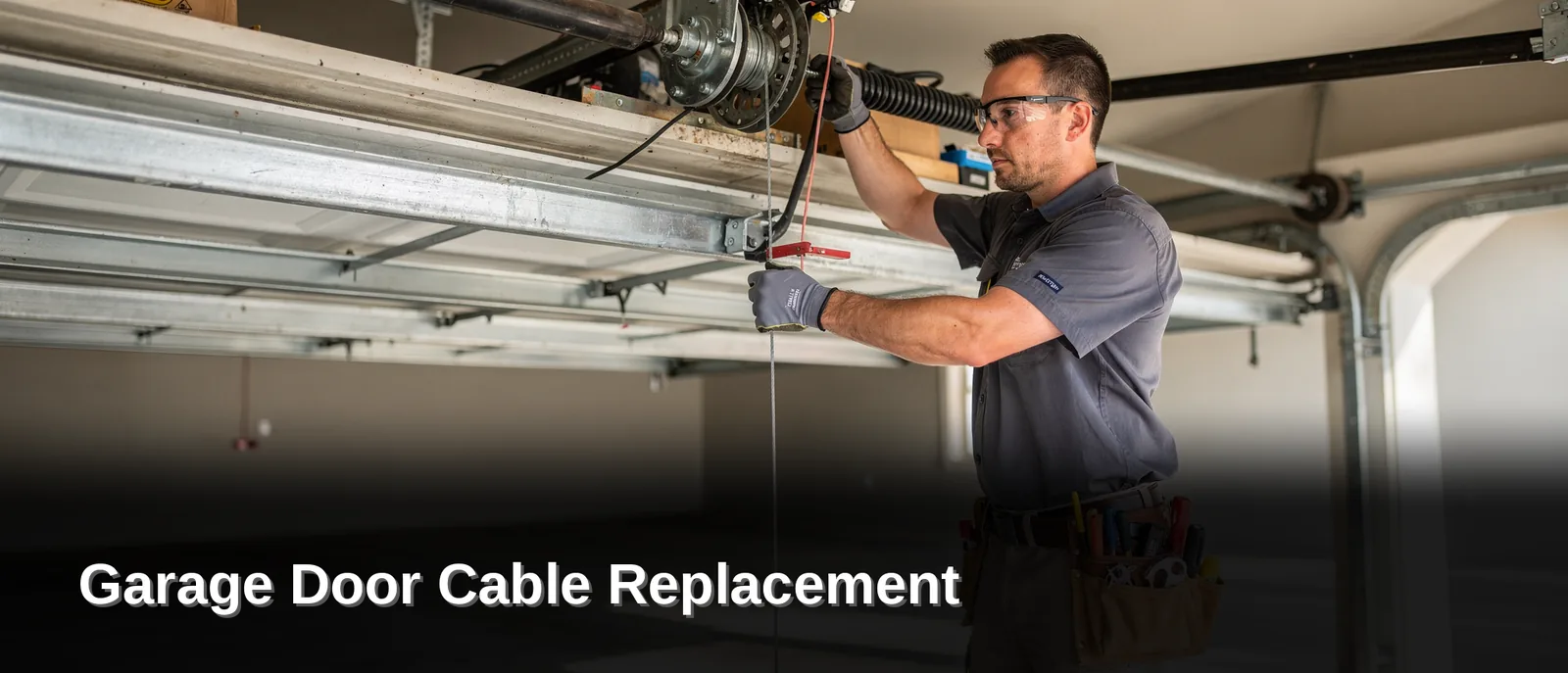
Auto-reversal happens when a garage door hits the floor. Immediately opens again, a built-in safety feature signaling an underlying issue. Common culprits include misaligned safety sensors, worn-out springs, or incorrect force settings on the opener. Precision Garage Door Service of Bakersfield delivers emergency service for exactly these situations.
Key Takeaways
- Garage door reversal at floor level indicates a safety sensor malfunction requiring immediate professional inspection.
- Halfway closure followed by reopening signals either misaligned sensors or worn door springs needing repair.
- Precision Garage Door of Bakersfield diagnoses reversal issues through comprehensive safety mechanism and sensor testing.
- Ignoring repeated reversal problems creates safety hazards and accelerates wear on garage door components.
What Causes A Garage Door To Reverse?
A garage door reversing direction right after touching the floor signals a built-in safety response, not a random malfunction. Homeowners often describe this as the garage door closes then opens again within seconds, leaving the opening exposed overnight. The reaction exists to protect people, pets, and property from an obstructed or damaged door. It still points to an underlying problem that needs attention.
Several mechanical and electronic issues trigger this safety response:
- Misaligned or dirty photo-eye sensors near the base of the tracks
- Worn, stretched, or broken torsion and extension springs
- Incorrect force or limit settings on the opener’s control board
- Obstructions along the track that block smooth travel
Each cause ranges from a quick adjustment to a more involved mechanical repair, which is why diagnosing the exact trigger matters before attempting a fix.
Why does a garage door that won’t stay closed need professional attention?
A garage door won’t stay closed when a safety mechanism keeps detecting a problem it can’t ignore, even after a reset attempt. Worn springs and faulty control boards rarely resolve on their own. Tend to worsen over time, putting added strain on the opener motor.
When should homeowners call for garage door repair?
Garage door repair becomes urgent once reversing happens repeatedly or the door won’t latch at all. Precision Garage Door Service of Bakersfield delivers emergency service for exactly these situations, helping homeowners throughout Bakersfield, CA, and the surrounding area secure their garage before small mechanical issues turn into bigger safety hazards.
How Do I Inspect The Safety Sensors?
Safety sensors sit low on each side of the garage door track. A quick visual check often reveals why a garage door closes then opens unexpectedly. Dirty lenses, loose brackets, or misaligned units rank among the most common reasons a door reverses instead of sealing shut. A homeowner can run through a basic inspection in minutes before deciding whether they need professional help.
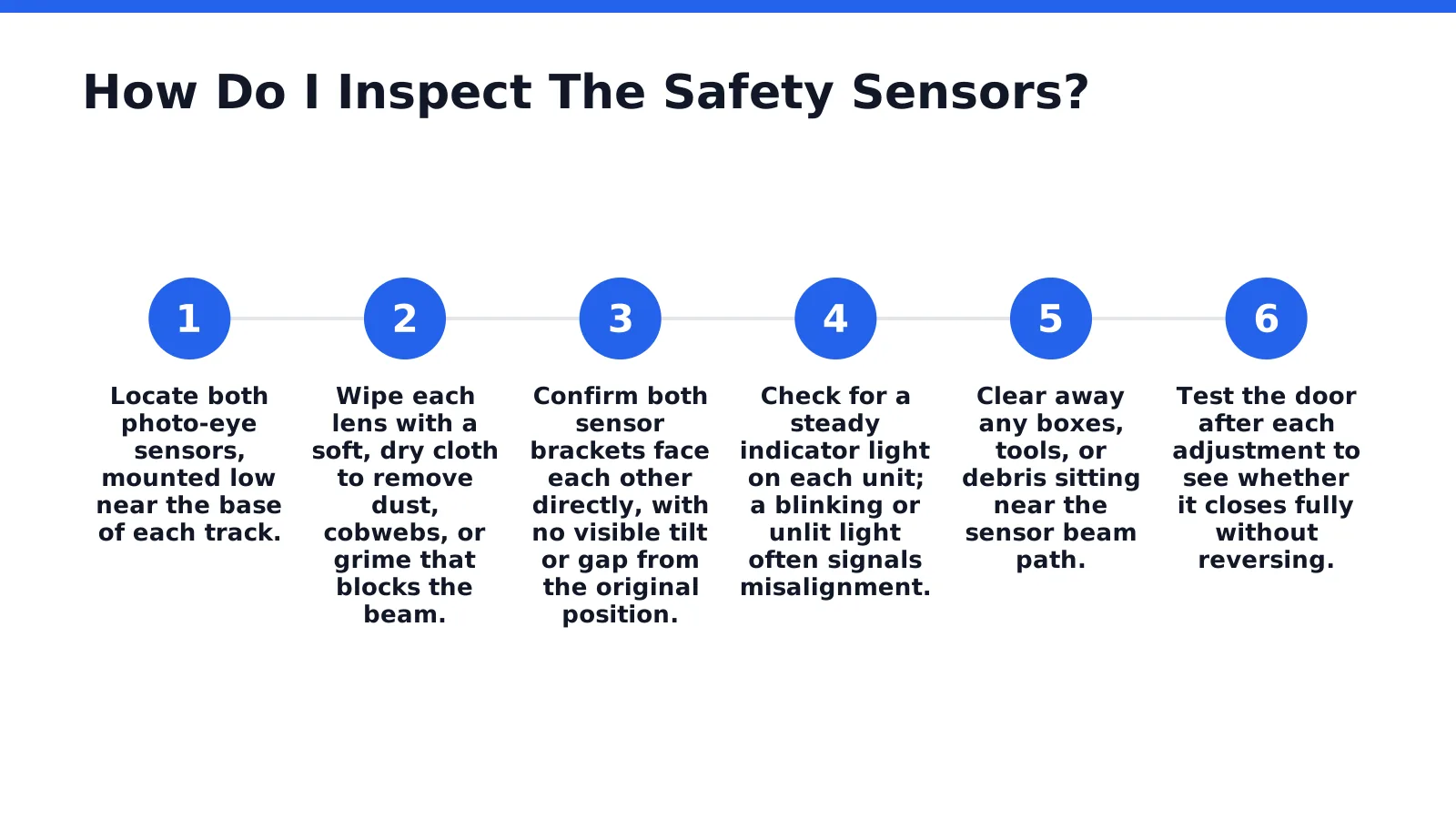
The following steps outline a simple sensor check:
- Locate both photo-eye sensors, mounted low near the base of each track.
- Wipe each lens with a soft, dry cloth to remove dust, cobwebs, or grime that blocks the beam.
- Confirm both sensor brackets face each other directly, with no visible tilt or gap from the original position.
- Check for a steady indicator light on each unit; a blinking or unlit light often signals misalignment.
- Clear away any boxes, tools, or debris sitting near the sensor beam path.
- Test the door after each adjustment to see whether it closes fully without reversing.
Why Does The Door Still Reverse After Cleaning The Sensors?
Sometimes a garage door won’t stay closed even after a thorough cleaning, which points to a deeper alignment issue or wiring fault. Brackets can shift slightly over time from vibration or accidental bumps, throwing off the beam without any obvious visual sign.
When Should A Professional Handle Sensor Problems?
Persistent reversing after basic troubleshooting usually calls for trained eyes and proper tools. Certified technicians quickly check and realign sensors causing reversal. Precision Garage Door Service of Bakersfield delivers emergency garage door repair for households facing this exact safety concern.
Why Does The Door Stop Closing Midway?
A garage door that stalls partway down and reverses almost always points to an obstruction near the threshold. This pattern, known among homeowners as a garage door closes-then-opens scenario, signals that the safety system detected something blocking the panel’s path before it reached the floor. Technicians trace most midway reversals to one of two culprits: a blocked threshold or debris sitting where the sensors can “see” it.
What Should Homeowners Check First?
The threshold deserves the first look before you call for professional help. This strip along the floor is designed to be sensitive and can catch even small obstacles. The door stays safe for nearby people and pets. A pebble, a toy, or a stray tool left in that zone can convince the opener that something is in the way, triggering an automatic reverse.
Does Debris Cause The Reversal?
Dust, leaves, and small debris build up at the base of the door over time. That buildup tricks the system into believing an obstruction sits in the door’s path. As a precaution, the opener pulls the panel back up rather than risk closing on something solid.
Homeowners dealing with a garage door won’t stay closed complaint should follow these steps before escalating:
- Clear the threshold of dirt, leaves, and small objects.
- Wipe down the sensor area at the base of each track.
- Test the door through one full cycle to confirm it closes smoothly.
- Note whether the reversal still happens at the same point.
When these checks don’t resolve the stalling, deeper mechanical issues may be at play. Precision Garage Door Service of Bakersfield delivers emergency garage door repair, giving homeowners a fast path to a same-day fix.
How Do I Adjust Force And Limit Settings?
Force and limit settings control how far a garage door travels and how much resistance the opener tolerates before reversing. Homeowners dealing with a garage door that closes then opens on every attempt often trace the problem back to these two settings being out of calibration. Incorrect limit settings and miscalibrated force sensitivity rank among the most common mechanical reasons a garage door won’t stay closed, alongside dirty sensors, worn springs, and failing control boards.
Before touching any opener settings, homeowners should confirm the photo-eye sensors are clean and properly aligned, since adjusting force or limits won’t fix a sensor-related reversal. Once the sensors check out, move on to the adjustment screws or digital menu on the opener unit.
- Locate the force and limit adjustment screws or digital settings menu on the opener motor housing.
- Test the door’s current travel distance by running a full open-close cycle and noting where it stops short or reverses.
- Turn the limit screw in small increments, testing after each turn, until the door closes fully without reversing.
- Adjust the force setting gradually, avoiding overcorrection that could mask a worn spring or track obstruction.
- Run three to five complete cycles to confirm consistent, safe operation.
Why Does Adjusting Settings Myself Feel Risky?
Force settings that get turned too high can mask a dangerous mechanical fault instead of fixing it, turning a simple adjustment into a safety hazard. Precision Garage Door of Bakersfield provides upfront written estimates before adjusting opener settings or starting repairs. Homeowners know exactly what’s happening before work starts.
Every force and limit adjustment performed as part of a professional garage door repair carries an industry-leading warranty, giving homeowners lasting peace of mind long after the technician leaves.
When Should You Call A Professional Technician?
Three attempts at a fix mark the line between a simple adjustment and a job for a trained technician. Homeowners who clean the sensors, clear the tracks, and still watch the door reverse need expert help. A garage door closes then opens repeatedly despite basic troubleshooting, which usually points to a force setting, wiring, or spring issue that goes beyond a quick fix. Waiting longer only risks a door that slams, a motor that burns out, or a spring that snaps under tension.
How Does a Homeowner Know It’s Time to Call for Repair?
A door that won’t fully close, one that reverses at random points, or one making grinding or snapping sounds all signal a need for professional attention. Homeowners facing a garage door won’t stay closed situation should not keep testing the remote; repeated cycling stresses the opener’s motor and gears. Any sign of a frayed cable, bent track, or sagging section calls for an immediate service appointment rather than a DIY attempt.
Precision Garage Door Service of Bakersfield answers these calls from 5am to 11pm. Homeowners never see an added charge for after-hours visits. That no-overtime policy applies whether the call comes at noon or midnight, giving families one less thing to worry about during an already stressful repair.
Trust matters when a stranger is working near heavy springs and a multi-hundred-pound door. Over 1,688 customers have relied on this team for dependable garage door repair. That track record has earned a 4.8-star rating. For homeowners who’ve exhausted the basic checks, scheduling a licensed technician protects both the household and the equipment.
FAQ
Why does a garage door close then open again?
This happens because of auto-reversal, a built-in safety feature that triggers when the door hits the floor and detects a potential issue. Common causes include misaligned safety sensors, worn springs, or incorrect opener force settings.
What should I do if my garage door won’t stay closed?
A door that keeps reversing signals an underlying problem that won’t resolve on its own and tends to worsen over time.
Conclusion
In closing, a garage door that closes then opens again isn’t something you should ignore; it’s your door telling you something needs attention. Whether it’s a sensor issue, a worn spring, or a safety feature doing its job, the good news is these problems have real solutions. Getting to the root cause early saves you headaches and keeps your garage operating safely. When you’re ready to tackle this, you’ve got the knowledge to understand what’s happening and the confidence to move forward.