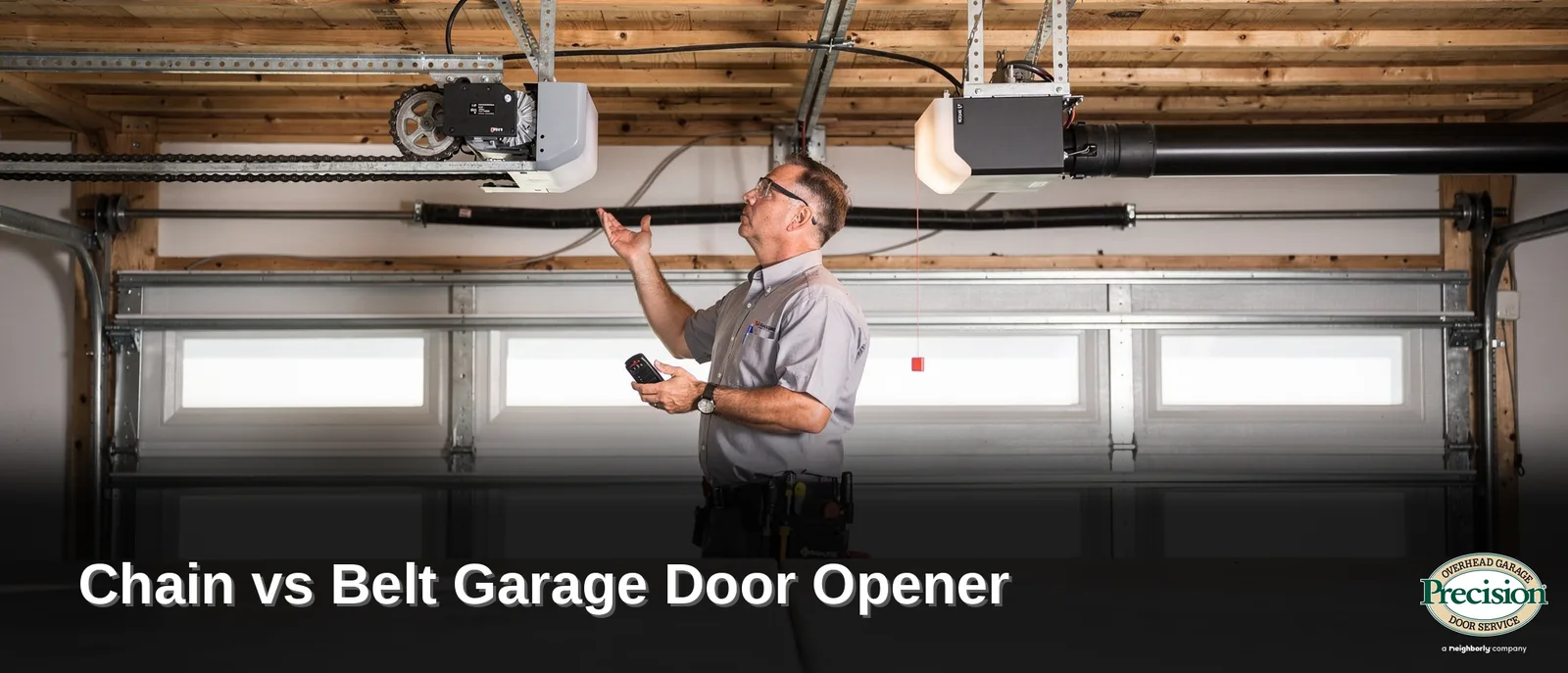
When it comes to chain vs. belt garage door openers, belt-drive and chain-drive openers serve different priorities for Bakersfield homeowners. Belt-drive openers use a rubber belt, producing quieter operation ideal for garages near bedrooms and requiring less maintenance over time. Chain drive openers use a metal chain, delivering stronger lifting power for heavier doors at a lower upfront cost. Precision Garage Door of Bakersfield installs both types.
Key Takeaways
- Belt drive openers operate much more quietly, making them ideal for homes with attached garages.
- Chain drive systems require regular maintenance and lubrication to prevent wear and noise buildup.
- Belt drive openers last longer with minimal upkeep, reducing long-term maintenance demands on homeowners.
What’s Really Different Between Chain and Belt Openers?
Mechanics separate these two systems, not marketing labels. A chain vs belt garage door opener decision comes down to what actually pulls the trolley along the rail: metal links versus a reinforced rubber band. That single design choice shapes noise levels, smoothness, and how the door feels every time it opens.
Chain systems rely on a metal chain, similar to a bicycle chain, looped around a sprocket to drag the trolley toward the door. Belt systems swap that chain for a reinforced rubber belt, which moves the same way but without metal-on-metal contact. Homeowners in Bakersfield, CA often notice the difference the first time the opener runs.
Why does the drive mechanism matter so much?
The mechanism determines vibration and sound transfer through the garage structure. Metal chains tend to rattle against the rail. That rattle can carry into attached bedrooms or living spaces above the garage. Rubber belts absorb more vibration before it travels, changing the daily experience of using the door.
Precision Garage Door of Bakersfield, based right in Bakersfield, CA, walks local homeowners through this exact tradeoff before they commit to a replacement. Because the company operates directly out of the local community, homeowners get in-person guidance rather than generic advice pulled from a manual.
Which drive type fits an existing garage setup?
That depends on the garage’s structure and how it’s used day-to-day. Consider these points before deciding:
- Attached garages under living space often benefit from the quieter rubber-belt design.
- Detached garages may tolerate chain-driven noise without disrupting the household.
- Heavier doors sometimes pair well with the pulling strength chain systems provide.
Homeowners throughout Bakersfield, CA can rely on Precision Garage Door of Bakersfield for straightforward, honest answers on how each option performs once installed.
Which Opener Runs Quieter for Bakersfield Homes?
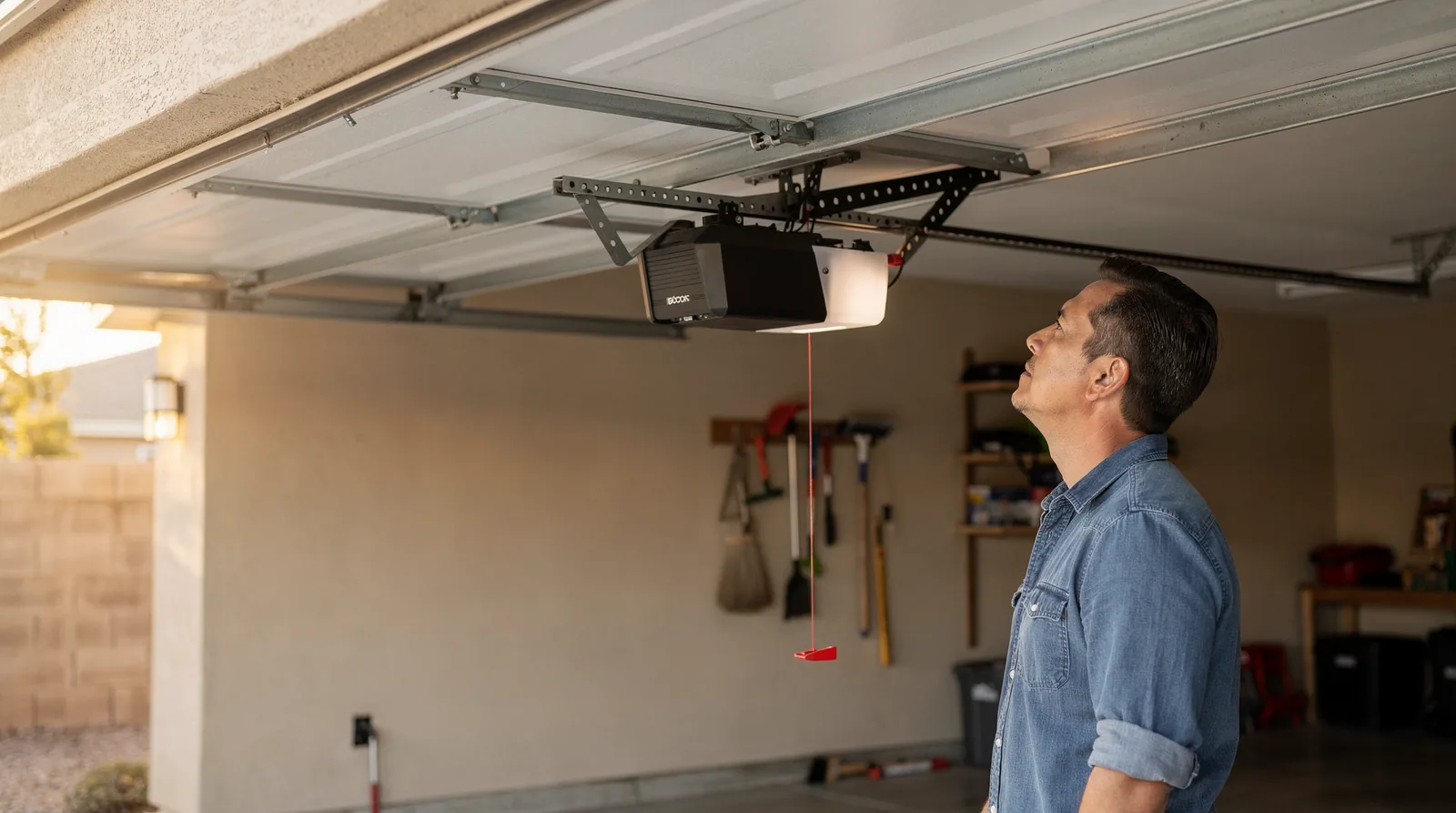
Belt drive openers win the noise contest, hands down. For a garage sitting under or next to a bedroom, that quiet performance matters more than most homeowners realize until they’re jolted awake by a 6 a.m. door cycle. The decision in the chain vs belt garage door opener comparison often comes down to exactly this factor.
The quiet advantage comes from what moves the trolley along the track. Belt-drive systems rely on rubber belts instead of metal chains. That material swap eliminates most of the clanking and metal-on-metal contact that chain systems produce. Chain drives, by contrast, can turn genuinely noisy, particularly in cold weather when the metal chain contracts and rattles against the rail. Bakersfield’s winter mornings, cold enough to tighten that metal, can make an already-loud chain opener even louder.
Does a Belt Drive Really Matter for Bedrooms Above the Garage?
Yes, especially in homes where a bedroom sits directly above or adjacent to the garage. A rattling chain opener can disturb sleep every time the door cycles. A belt-driven system runs smoothly enough to go unnoticed. Local technicians at Precision Garage Door of Bakersfield, based in Bakersfield, CA, frequently steer homeowners toward belt drives specifically because of this bedroom-proximity issue.
Quick comparison:
For anyone in Bakersfield replacing an opener near a nursery, home office, or bedroom, the belt-drive route solves the noise problem early.
How Do Maintenance Needs Compare Between the Two?
Belt-drive systems generally demand less upkeep than chain-vs.-belt garage door opener setups running on metal chains. A rubber-based belt doesn’t require the periodic lubrication a chain does. It also avoids the metal-on-metal wear that can eventually throw a chain out of alignment. That lower-maintenance profile makes belt systems appealing for garages near bedrooms or shared living spaces. Quiet operation matters as much as convenience.
Chain systems still hold up well. They ask homeowners to stay on top of tension checks and periodic lubrication to keep noise and strain in check. Skipped maintenance leads to sagging chains and rougher operation over time.
Does a belt drive opener still need regular check-ups?
Yes — even low-maintenance belt systems benefit from periodic inspection. Technicians from Precision Garage Door of Bakersfield, located in Bakersfield, CA, can inspect either drive type during a routine visit, checking chain tension on one system or belt wear on the other. Catching minor wear early prevents bigger repair needs down the road.
Which system fits a homeowner’s maintenance comfort level?
That depends on how much hands-on upkeep a homeowner wants to manage. Consider the basics side by side:
Homeowners working with Precision Garage Door of Bakersfield, based in Bakersfield, CA, get guidance matching a system to their preferred maintenance routine. Because the business operates locally, scheduling a check-up on either a chain or belt opener stays simple and convenient for Bakersfield-area homeowners.
Which System Fits Your Budget and Door Weight?
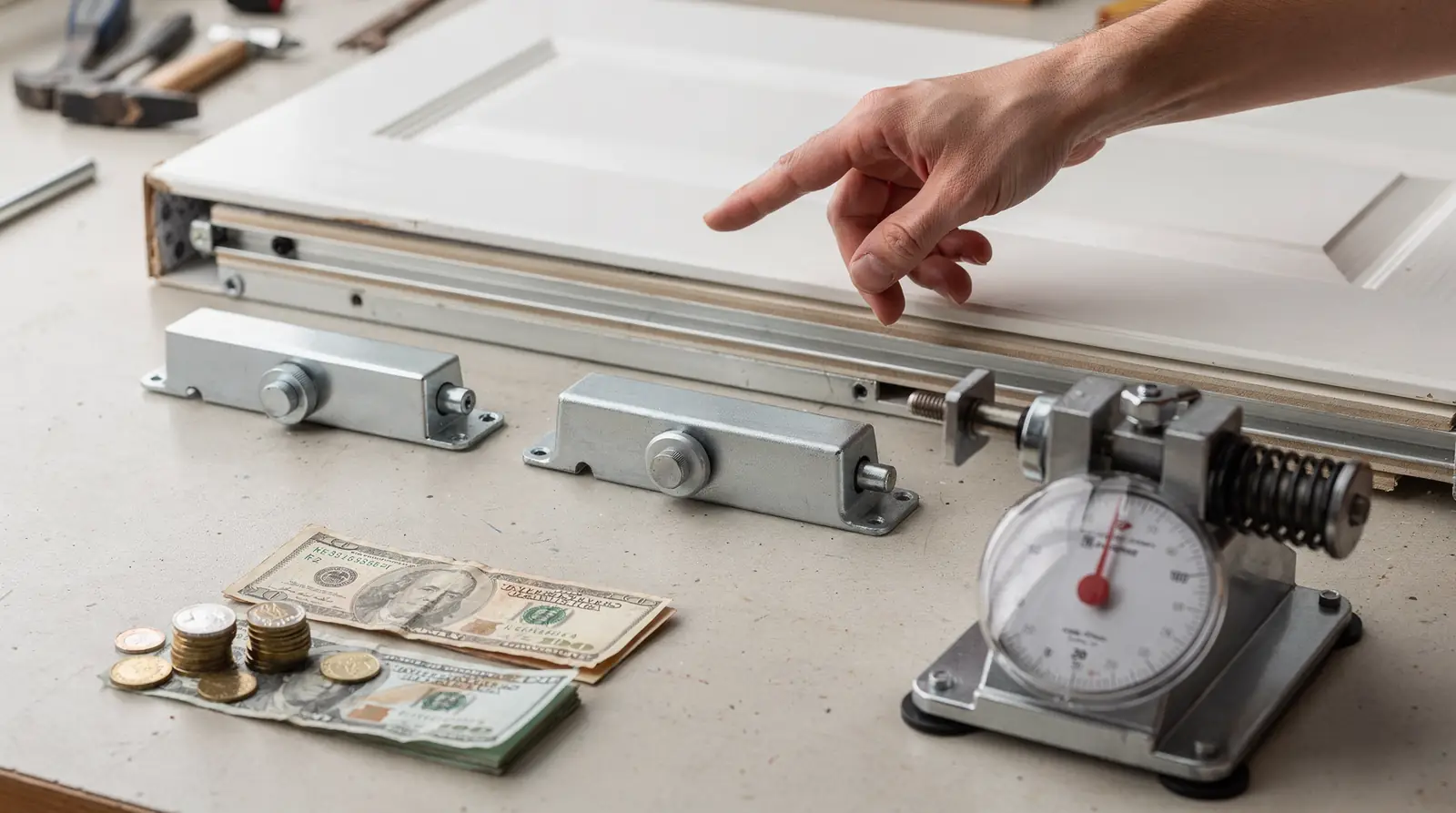
Budget and door weight matter more than personal preference. A heavier door with multiple panels demands consistent lifting strength. A lighter door leaves more room to prioritize quiet operation. Precision Garage Door of Bakersfield, an official business identification serving Bakersfield, CA homeowners, walks clients through options across budgets, from economical chain drives to premium belt-drive systems.
Chain-drive openers use a metal chain. They typically require a lower upfront investment, making them a practical choice for households watching their spending closely. Belt-drive systems generally run higher than chain-drive options, reflecting their smoother, quieter operation. That value gap isn’t about one system being “better” outright. It’s about matching the mechanism to the household’s priorities.
Both drive types deliver dependable performance over the long run. They differ in noise level and upkeep. Those differences shape the real value each system brings to a home.
Does a Heavier Garage Door Need a Chain Drive?
Heavier doors, especially those with insulated or multi-panel construction, often benefit from a chain drive’s straightforward lifting strength. Belt drives can still handle heavier doors, but homeowners should confirm the opener’s lifting capacity matches the door’s actual weight. Precision Garage Door of Bakersfield helps homeowners in Bakersfield, CA weigh that capacity against household needs before deciding.
Is a Belt Drive Worth the Extra Investment?
For homes with living space above or beside the garage, quieter operation often justifies the higher investment. Households less concerned with noise may find a chain drive delivers comparable reliability for less.
So Which Opener Is Right for Your Home?
No single opener wins for every household. The right choice between a chain vs belt garage door opener depends on specific needs like noise tolerance, garage layout, and how the space gets used day to day. A homeowner with a bedroom above the garage weighs quiet operation differently than someone using the garage purely for storage and parking.
Rather than guessing, homeowners benefit from expert input tailored to their actual door and space. Precision Garage Door of Bakersfield, located in Bakersfield, CA, helps homeowners work through that decision for their specific garage setup. Local support matters because factors like door weight, insulation, and existing hardware affect which drive system performs best.
How does a homeowner know which drive system fits their garage?
Start with what matters most: silence, strength, or upfront investment. A bedroom, home office, or living space near the garage points toward quieter operation. A detached garage with heavier doors may prioritize lifting power instead.
Who can homeowners in Bakersfield contact for help deciding?
Local homeowners can contact Precision Garage Door of Bakersfield, based in Bakersfield, CA, to schedule an opener replacement or a new installation. A professional opinion beats guesswork or generic online advice.
A few quick questions help narrow things down:
- Is there living space directly above or beside the garage?
- Does the current door feel heavy or show signs of strain?
- Is quiet nighttime operation a priority for the household?
Because Precision Garage Door of Bakersfield serves the Bakersfield, CA area directly, homeowners get local, hands-on support with whichever system best fits their garage.
FAQ
Why is a belt drive garage door opener quieter than a chain drive?
Belt drive openers use a reinforced rubber belt instead of a metal chain, which eliminates the metal-on-metal contact that causes rattling. This makes belt drives ideal for garages near bedrooms or attached living spaces.
Which opener requires less maintenance over time?
Chain drive systems, by contrast, require regular maintenance and lubrication to prevent wear and noise buildup.
Does a chain drive opener offer any advantages over a belt drive?
Chain drive openers deliver stronger lifting power for heavier doors and come at a lower upfront cost. Detached garages may also tolerate chain-driven noise without disrupting the household.
Conclusion
In closing, choosing between a chain and belt drive opener comes down to your priorities—noise tolerance, budget, and how long you want your system to last. Both get the job done reliably, but understanding these differences helps you make the right call for your home. Whatever you decide, investing in quality equipment and professional installation pays off in smooth, dependable operation for years to come.