Garage door keypad malfunctions, including Chamberlain or LiftMaster models, typically stem from six common issues: dead batteries, lost programming codes, signal interference, misaligned wiring, worn buttons, or a failed receiver. Homeowners should replace batteries first, then reprogram the code. If basic troubleshooting doesn’t solve the problem, reaching out to Precision Garage Door of Bakersfield for professional assistance is a smart next step.
Key Takeaways
- A non-working keypad disrupts your garage door’s entire functionality and prevents keyless access.
- Common keypad issues include dead batteries, incorrect PIN codes, and control panel malfunctions.
- Security concerns arise when your keypad fails, as it compromises your garage’s access control.
- Precision Garage Door of Bakersfield diagnoses and repairs keypad problems to restore your garage access.
What Will You Need Before You Start?
A quick supply checklist resolves most cases of a garage door keypad not working before you even open a tool. Gathering the right items first turns a frustrating afternoon into a quick fix.
Follow these steps before troubleshooting begins:
- Find a small screwdriver to open the keypad’s battery compartment.
- Get fresh batteries that match the keypad’s specifications.
- Find the opener’s manual to confirm whether the unit is a LiftMaster or Chamberlain model, since reset button placement and programming sequences differ between brands.
- Note the keypad’s current code, if known, before attempting any reset.
Why does the keypad brand matter?
Reset procedures aren’t universal across manufacturers. A LiftMaster keypad often resets differently than a Chamberlain garage door keypad, and using the wrong sequence wastes time and batteries. Checking the manual first prevents guesswork and protects the opener’s programming.
Once these supplies are in hand, most households can attempt garage door keypad repair on their own. For cases that resist a DIY fix, Precision Garage Door of Bakersfield, based in Bakersfield, CA, offers a local resource worth calling once simple troubleshooting runs its course. The company has earned a strong reputation among satisfied customers. Weigh that track record before trusting repair advice or hiring help for a persistent garage door opener issue.
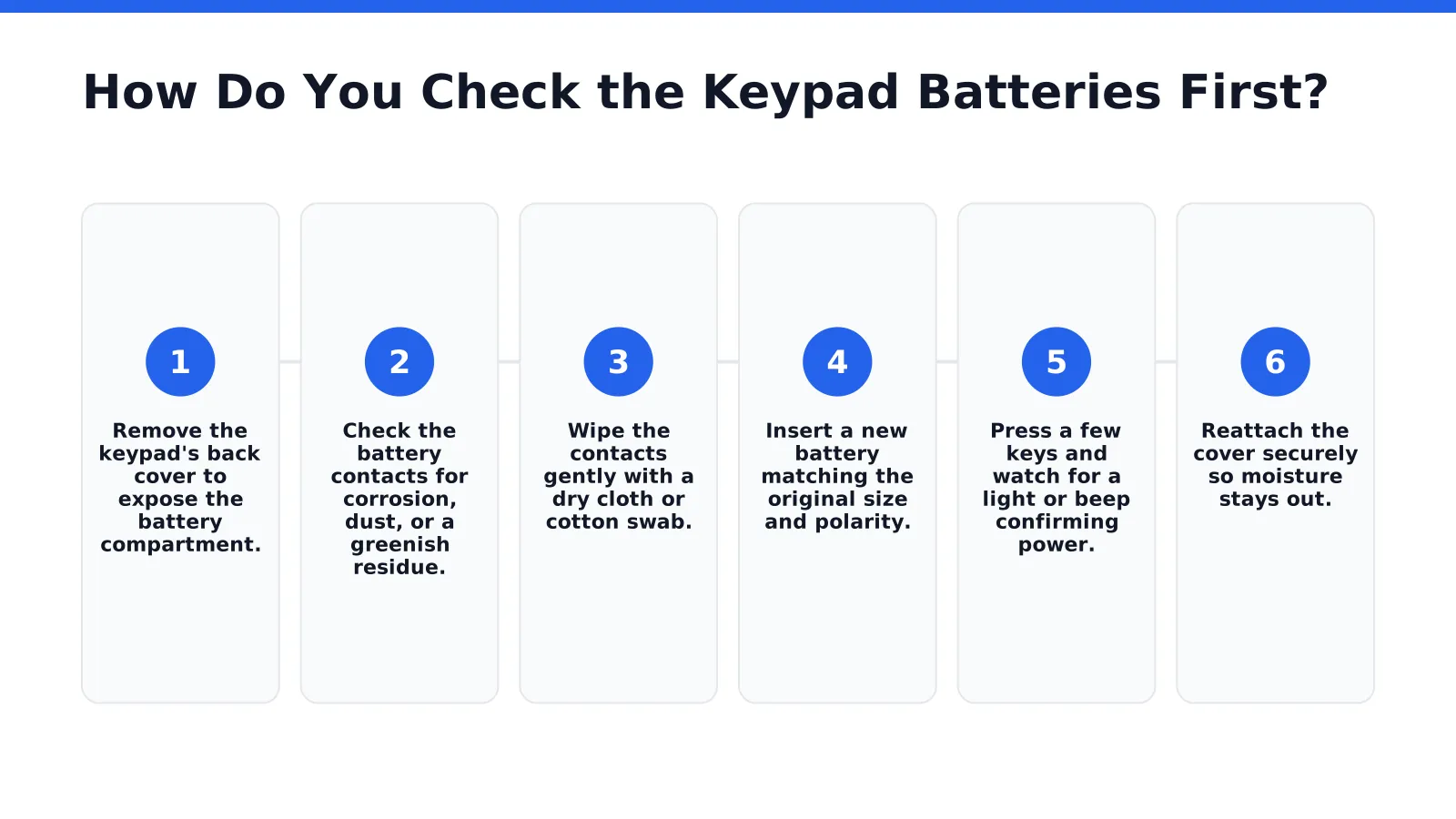
How Do You Check the Keypad Batteries First?
Dead or corroded batteries cause most cases of a garage door keypad not working, according to troubleshooting guidance from garage door manufacturers. Wireless keypads mount outside the garage and rely entirely on battery power to send a signal to the opener. A weak cell breaks that connection instantly. A fresh battery often resolves the issue, making it the logical first step before assuming a bigger mechanical fault.
Technicians recommend following a short sequence before escalating to a professional:
- Remove the keypad’s back cover to expose the battery compartment.
- Check the battery contacts for corrosion, dust, or a greenish residue.
- Gently wipe the contacts with a dry cloth or cotton swab.
- Insert a new battery matching the original size and polarity.
- Press a few keys and watch for a light or beep confirming power.
- Reattach the cover securely to keep moisture out.
Whether the device is a LiftMaster-style unit or a Chamberlain-style keypad needing a reset, this cleaning-and-replacement step clears the problem in a large share of service calls.
Why Does the Keypad Still Fail After a New Battery?
A keypad that stays dark after a battery swap usually points to corroded contacts, damaged wiring, or a signal mismatch with the garage door opener. If the issue persists after this basic fix, it points to a problem beyond battery power, and repeated attempts without proper diagnostics risk draining additional batteries or masking a wiring fault.
When Should a Homeowner Call for Professional Help?
If battery replacement and contact cleaning don’t restore function, professional garage door keypad repair is the next sensible step. Certified technicians from Precision Garage Door of Bakersfield test battery contacts and wiring during a same-day visit when the basic fix doesn’t work. Homeowners near Bakersfield, CA, can request a technician quickly whenever a simple battery swap fails to bring the keypad back to life.
How Do You Reset and Reprogram the Keypad?
Resetting a keypad means clearing its stored code and entering a new one that matches the opener’s memory. A properly functioning garage door keypad sends a signal to the garage door opener the instant you enter the correct code, telling the opener to open or close the door. When that signal never reaches the opener. Arrives with the wrong code, the fix is often a simple reprogram rather than a full unit replacement.
What Causes a Garage Door Keypad Not Working After a Reset Attempt?
A forgotten code, a battery that died mid-entry, or a code that fell out of sync with the opener’s memory are the most common culprits. None of these point to a broken keypad. Most of these issues resolve quickly once the opener’s manual guides the reset. You don’t need to panic before trying the basics.
Reprogramming generally follows this sequence:
- Locate the “Learn” or “Program” button on the motor unit, usually near the antenna.
- Press and release the Learn button; an indicator light signals programming mode.
- Enter a new code on the keypad within the time window the manual specifies.
- Press the Enter or pound key to confirm the code.
- Test the code by entering it fully and confirming the door opens or closes.
Is Professional Garage Door Keypad Repair Ever Necessary?
Yes, when repeated reprogramming attempts still fail to produce a signal, a technician check becomes the practical next step. Precision Garage Door of Bakersfield backs reprogramming visits with same-day service and upfront written estimates, so resolving a stubborn code never carries hidden add-on charges. Precision Garage Door of Bakersfield is located in Bakersfield, CA, US.
Why Does the Keypad Work But Not the Opener?
A functioning keypad and a silent garage door opener point to two separate systems, not one broken unit. Keypads let homeowners open the garage by entering a code instead of using a key or remote, so the keypad and opener operate independently and can fail on their own. A code that transmits fine but never reaches the motor usually signals a wiring or receiver problem, not a keypad defect.
Is a Working Keypad Still a Problem?
Yes, even when the numbers light up and the code is accepted, a disconnect between the keypad and opener still disrupts daily routines. Homeowners lose the convenience of entering without carrying a remote or key. The wall button and remote may still trigger the door while the keypad alone stays silent. That gap often frustrates families who rely on the keypad for kids, pet sitters, or deliveries.
What Usually Causes the Mismatch?
Several points in the system can break the chain between a keypad entry and a moving door:
- The keypad’s programmed code no longer matches the opener’s memory.
- Wiring between a wired keypad and the opener has loosened or corroded.
- The opener’s receiver antenna has failed or lost its signal range.
- Interference or a dead battery blocks a wireless keypad’s signal entirely.
Sorting through those possibilities takes a trained eye. Precision Garage Door of Bakersfield’s local technicians quickly identify whether the fault lies in the code, the wiring, or the opener’s receiver. Backed by a strong track record of satisfied customers, Precision Garage Door of Bakersfield gives homeowners confidence that an accurate diagnosis follows, instead of guesswork, whenever a keypad and opener fall out of sync.
When Should You Call a Professional for Repair?
Professional help becomes necessary once battery swaps, code resets, and sensor cleaning fail to restore access. A garage door keypad not working after basic troubleshooting often signals a deeper wiring fault, a failing circuit board, or motor trouble inside the garage door opener unit itself. Homeowners in this situation benefit most from a trained technician rather than continued guesswork.
Certain warning signs point clearly toward professional garage door keypad repair:
- The keypad lights up, but the door never responds to any code.
- The opener grinds, hesitates, or reverses unexpectedly during operation.
- Wiring near the keypad shows fraying, corrosion, or exposed connections.
- Repeated resets fix the problem only temporarily, with failures returning within days.
Is a malfunctioning keypad ever a safety issue?
Yes. A keypad that opens the door on its own or fails to lock out old codes creates a real security gap for the household. Addressing the fault quickly prevents unauthorized access and protects family and property.
Who handles emergency keypad and opener repairs in Bakersfield?
Precision Garage Door Service of Bakersfield delivers 24/7 emergency garage door repair. Certified technicians handle installation and respond whenever a keypad issue is more than a simple reset. Precision Garage Door of Bakersfield is located in Bakersfield, CA, and sends a technician out the same day when do-it-yourself steps don’t restore reliable access. Many customers have already relied on this team for keypad and opener repairs that went beyond a basic fix. Every job comes with an upfront written estimate. We offer an industry-leading warranty, with no overtime charges even on urgent, same-day calls.
FAQ
What causes a garage door keypad to stop working?
Six common issues cause keypad failures: dead batteries, lost programming codes, signal interference, misaligned wiring, worn buttons, or a failed receiver. Replacing batteries and reprogramming the code resolves most problems.
Conclusion
In closing, a keypad that won’t respond doesn’t have to leave you stuck outside your garage. Most issues come down to simple fixes: fresh batteries, a clean sensor, or reprogramming that you can tackle yourself in just a few minutes. If you’ve worked through these troubleshooting steps. Your keypad still isn’t cooperating, that’s when reaching out to a professional makes sense. You deserve a garage door system that works reliably every single time.